Today’s article looks at sexless marriage advice for men from a man who has been there, namely myself.
Some of what you’ll read will be familiar. Some of it will be news to you. Some of it might challenge you.
But whatever you experience, know that as a man and a husband of nearly sixteen years, I’ve been where some of you are right now, for reasons I’ll share.
I’m not making light of anything, nor pretending a sexless marriage is easy, because it’s not. It’s downright frustrating.
You get angry, you feel powerless, and sometimes you even start feeling sorry for yourself.
But if you’re going to have any chance of staying married long-term and repairing your married sex life, you’re going to have to banish your divorce thoughts and get your head back in the game.
Now, is there a time to walk away from a sexless marriage? Maybe. We’ll look at it.
Let’s start with the reality of a sexless marriage, and I’ll share some of my own experience too.
The Reality of a Sexless Marriage: My Experience
A sexless marriage occurs when you or your partner does not want or cannot have sex.
When this happens, many men begin to believe something is wrong with them, which leads to unhelpful thinking and behaviour patterns.
The truth is that a sexless marriage can be difficult, but men have more power to address the problem than they realise, provided both partners are willing to talk things out without judgement, listen intently, and work towards a solution together.
Is it a complex and sometimes long journey? Yes. But unless you want to leave your marriage, you will have to accept and deal with what you have in your situation.
After all, marriage is a pledge to be there for each other “in sickness and in health.”
It’s not all rainbows and unicorns.
Before we go further, let me say that my wife and I have been married for over twenty years, most of it fantastic and full of adventure.
But like most marriages and relationships, ours has had its share of difficulties.
We went through a sexless marriage a few years ago, driven by depression, a miscarriage, and hormonal issues.
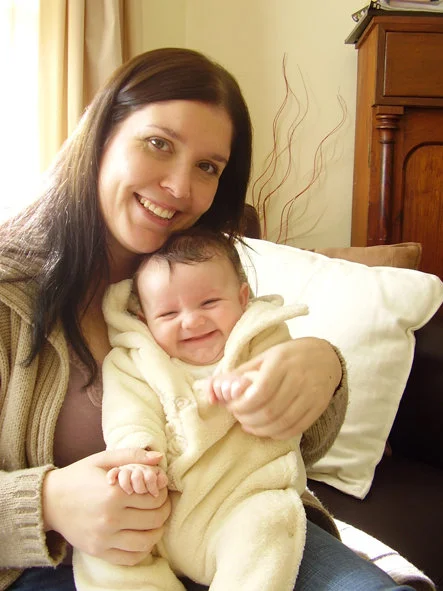
“My wife and son when he was a baby”
Without getting into too much detail, what ended up happening was that my wife and I went through an 18-month dry spell where sex wasn’t happening frequently, if at all.
A sexless marriage is a significant difficulty on its own, but we were also dealing with much more severe issues at the time. My wife had lost a baby and was struggling with depression, which was hard on her and on us as a couple.
To make matters worse, we were new immigrants in a foreign country with no familiar support systems, which made everything harder still.
Being in a sexless marriage was initially overshadowed by these other concerns, but it gradually became a significant issue for us as a couple in its own right.
My wife battled just as much as I did, probably more emotionally, because she carried a lot of guilt and shame for not “feeling like doing it.”
Even though she wanted to, she couldn’t, and neither of us knew how to solve it. Believe me, we tried everything.
But when you’re dealing with mental health and hormone issues, without a healthy lifestyle to fall back on, things get complicated fast.
It was a long battle with tonnes of frustration, pleading, suggesting, nagging, self-shaming, and self-criticism.
In the end, we stuck it out, kept communicating, concentrated on what we could control, and managed to break free from a sexless marriage, emerging stronger as a couple for it.
With that said, let me be completely honest: the reality of a sexless marriage can be highly frustrating and leave you feeling utterly powerless as a man.
You keep the whole thing going for the sake of the family and kids, but there is very little emotional connection and sexual intimacy left.
The man in a sexless marriage frequently feels neglected and insignificant, as if it’s his fault somehow.
He may believe he isn’t good enough for his wife, or that she is no longer sexually interested in him, and that can breed both unhappiness and resentment.
He needs somewhere to put those feelings, and they often come out through what psychology calls “displacement.”
Displacement is how we shift our attention or feelings from one person or thing to another. We may displace frustration at our wife onto our children or pets at home.
He may also use food or alcohol to numb what he’s actually feeling. But that’s not where the answer lies.
If you want to start repairing a sexless marriage, you have to put your marriage in the proper perspective, find the root cause, and do the things that heal the whole marital situation, not just the physical part. We’ll get into that shortly.
First, let’s define a sexless marriage properly before figuring out how to change it.
What Is a Sexless Marriage?
A sexless marriage has no single agreed definition, but it’s fundamentally a marriage where the couple does not engage in sexual intercourse.
That could be due to a lack of desire, an inability to have sex, or a mix of both.
With that in mind, it’s worth remembering that each couple decides what a healthy sexual frequency looks like for them. Every couple is different, which means every couple also effectively decides what counts as “sexless” for their own marriage.
Some couples feel sexless if they go a week without sex. Others don’t consider themselves sexless until a month or longer has passed. Plenty of married couples go far longer than that.
According to a 2018 New York Times article, around 15% of married couples are sexless, meaning they haven’t had sex with each other in the previous six months to a year.
So deciding whether you’re in a sexless marriage largely comes down to your and your spouse’s expectations around frequency, and whether your current dry spell deviates sharply from that.
Often one of you feels the sex life lacks passion while the other thinks things aren’t so bad.
In the end, it comes down to the general feeling in your marriage.
How Does A Sexless Marriage Affect a Man?
Based on my own experience, I can say that a sexless marriage can significantly affect a man, both physically and emotionally.
A sexless marriage can have a whole range of physiological effects on a man, from affected testosterone levels and raised cortisol, to weight changes, poor sleep, fatigue, and mental fog.
On the emotional side, a sexless marriage can also take a real toll on a man’s wellbeing. Without adequate dopamine from regular intimacy, he may become depressed and anxious.
One physiological pathway is testosterone. Ironically, while low testosterone can impair desire and performance, research suggests reduced sexual activity itself drives testosterone down, rather than the other way around.
Low testosterone can lead to muscle loss, lower bone density, and reduced energy, which brings its own behavioural fallout: low motivation, poor concentration, and for some men, mood swings or irritability.
That strain can put even more pressure on the relationship, and the couple may end up having even less sex as a result.
A lack of sex can also reduce endorphin production, which is linked to depression.
Emotionally, a man can feel rejected and unimportant if his wife isn’t interested in sex, and that can tip into isolation.
I know this happened to me.
He may start believing she’d be better off without him, a form of self-pity that, left unchecked, can deepen into real depression and feelings of worthlessness.
All of these are understandable reactions to a sexless marriage, but none of them will help you heal things.
Self-pity and nagging only make an already difficult situation worse, widening the gap between you and your wife instead of closing it.
You must rise above your own feelings and needs, especially sexual ones, for now at least, if you want to turn things around.
Whether a man can thrive in a sexless marriage long term is a different question, and I don’t think he can, for a few reasons.
Let’s start with biology. (I’m into psychology, not biology, so I’m happy to be corrected in the comments below.)
From an evolutionary perspective, sex matters to men partly because it’s how they pass on their genes, and partly because it’s a way to release stress and feel pleasure, raising endorphins and other mood-boosting hormones.
A man’s brain also seems to be wired somewhat differently to a woman’s when it comes to sex.
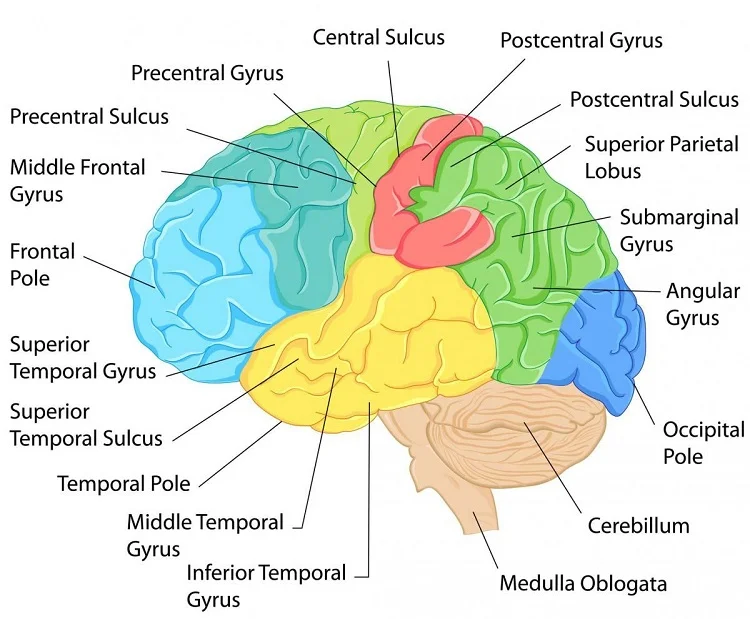
A 2020 examination of over 2,000 brain scans found real differences in the size of specific brain regions between men and women, differences that researchers link largely to the effect of sex hormones on brain development, and increasingly to the activity of genes on the sex chromosomes themselves.
Men and women, on average, show different cortical volumes in different areas.
Women tend toward larger prefrontal, orbitofrontal, and temporal regions.
Men tend toward larger ventral temporal and occipital regions, plus a larger amygdala, the region tied to sexual behaviour and the “fight or flight” response.
In practice, sex tends to be more about physical pleasure and less about emotion for men, and men are more likely to be aroused by visual images and drawn to casual sex.
The same happens in women, but two things push men’s response further: the amygdala, larger in men, also activates during exposure to sexual material, and men are simply more sexually aroused by visual stimuli in general.
Men report more frequent sexual thoughts, rate their own sex drive as stronger across the lifespan, and are more willing to spend money on sexual products and experiences.
When heterosexual couples disagree on frequency, it’s typically the man who wants sex more often, and actual frequency tends to land somewhere between what each partner wants.
Women, for their part, are more often willing to abstain from sex altogether, including through religious vows of chastity.
Masturbation tells a similar story, since it isn’t dependent on a partner being present.
Men masturbate more than women, start younger, and do so more often, a pattern confirmed across a large body of research, including Oliver and Hyde’s 1993 analysis of 177 studies, cited in Peplau’s review above.
Please note, this doesn’t mean women lack strong sexual urges or desires. It does seem, though, that sex is generally more important to the average man than the average woman. I’m happy to be corrected in the comments below.
The point of all this is simple: it seems very unlikely for a man to thrive in a sexless marriage, and he’s bound to look for some way to compensate for the missing intimacy.
That’s one level of it.
On another, a man also needs sex to feel connected to his wife, and to feel desired by her, because it makes him feel loved and important.
When a man feels like he’s the only one who can make his wife happy, it boosts his ego and makes him feel powerful and significant in her life.
He needs to feel emotionally and physically connected to her for a happy, fulfilling life, and without that connection, he can slide into destructive thinking and self-pity that’s toxic for both himself and the marriage.
Essentially, when a woman doesn’t have sex with her husband, it makes him wonder why, and to answer that question, he almost always makes himself the reason.
That leaves him feeling rejected and abandoned, which triggers deeper fears that tend to surface as anger, jealousy, resentment, or contempt.
Without sex, a marriage can also grow stale, and a couple that grows apart, sex or no sex, has very little chance of surviving long term.
A lack of sex in a marriage tends to spill into other areas too.
A husband who isn’t in tune with his wife physically often ends up withdrawing from her emotionally as well, and a man who’s no longer sexually or emotionally fulfilled may begin to cheat or seek intimacy elsewhere, which finishes off whatever connection was left.
What do we take from all of this?
What I take from it is that as a man, I’m hardwired to want sex, and quite a lot of it, and an indefinite sexless marriage is very hard to thrive in long term.
The answer doesn’t lie in acceptance. It lies in action.
So how does a couple take action against a sexless marriage, and what are the top causes worth understanding first?
If prevention really is better than cure, this is where we need to look.
Top Causes of a Sexless Marriage
Every relationship is different, which makes it hard to pinpoint the most significant contributors to a sexless marriage with total certainty.
Dr Tameca Harris-Jackson, a licensed marriage and family therapist and certified sex educator, says that while couples’ sexual activity naturally fluctuates, sexless periods tend to follow a connection between the mind and the body during unsatisfying stretches of a relationship.
Sexless periods are more likely to follow:
a medical condition or diagnosis that causes severe physical changes
unresolved disputes
high or ongoing stress
persistent worry
other extremely stressful life circumstances
Stress has a huge impact on sex, since an anxious mind is rarely in the mood.
The more stressed you are, the more it shows up in your body, and the less aroused either of you will feel.
Stress and depression can also impair orgasm and contribute to erectile dysfunction.
Dr Becker-Warner, a relationship and sex therapist from the Program in Human Sexuality at the University of Minnesota, points to a wider list of contributing factors:
internalised discrimination around sexual orientation
poor communication
untreated mental health concerns such as depression, sexual anxiety, or trauma
a new disability
Other common contributors include perimenopause or menopause, pregnancy, chronic fatigue or illness, medication side effects, limiting beliefs about sexuality, cultural or religious differences, infidelity, substance abuse, and asexuality.
As you can see, a wide range of things can leave a marriage sexless, and working out which ones apply to you is a key part of fixing it.
Following Dr Becker-Warner’s research, dips in sexual intimacy are typical across all couples.
It becomes a genuine problem when incompatible sexual interests leave one partner feeling negatively affected, and the couple stuck without a shared way forward.
When a couple is no longer on the same page and isn’t working together toward a solution, things get harder to manage.
So, with that in mind, we need to talk about a deeper issue that needs our attention and reflection.
How Your Eight Core Needs Shape a Sexless Marriage
Everything we’ve covered so far explains the visible causes of a sexless marriage.
Stress, grief, hormones, unresolved conflict.
It all plays a part.
But there’s a layer underneath all of that, and it’s a theory I work with most when considering human intention and behaviour: I call it your eight core psychological needs.
Essentially, every person is wired to pursue eight things:
Certainty,
Autonomy,
Variety,
Significance,
Competence,
Connection,
Growth, and Purpose.
And when a marriage consistently starves one or more (or all) of these needs, the relationship climate changes, and desire is usually one of the first things to suffer.
Desire doesn’t happen in a vacuum.
It happens, or doesn’t, inside the emotional climate two people build together.
But this isn’t just a theory I’m fond of.
It also lines up with what sex researchers already know about responsive desire, the kind of desire most people, especially women in long relationships, actually experience.
Unlike spontaneous desire, which shows up uninvited, responsive desire is triggered by context.
Rosemary Basson’s model of the female sexual response shows that for many people, wanting sex follows feeling safe, connected, and emotionally met, rather than the other way around.
So when I say a needs deficit changes the climate, I mean it literally.
A starved need is a blocked cue for responsive desire.
Here’s how each of the eight needs can quietly contribute to a sexless marriage.
Certainty.
If your wife doesn’t feel emotionally or financially secure in the relationship, her nervous system stays on alert. A nervous system on alert doesn’t prioritise arousal; it prioritises safety.
Autonomy.
If sex has started to feel like an obligation rather than a choice, desire tends to drop for both of you. Research on self-determination and sexual motivation consistently finds that when people have sex for autonomous reasons, because they want to and not because they feel pressured or guilty, both partners report more satisfaction and more desire.
Ironically, the harder you push for sex, the more you can undermine the very autonomy that makes her want it in the first place.
Variety.
Predictability kills eroticism. Esther Perel’s well-known observation is that the same closeness and safety that makes a marriage stable can quietly work against the sense of mystery that fuels desire. Couples who never introduce anything new, physically or otherwise, often mistake the resulting staleness for a loss of attraction, when it’s really a loss of novelty.
Significance.
If your wife doesn’t feel uniquely important to you, if she feels like one more task competing with work, the kids, or your phone, she’s unlikely to feel desired enough to want to be desirable.
Competence.
Feeling incompetent or criticised, whether about parenting, work, or the relationship itself, is one of the fastest ways to shut down desire. Nobody wants to be vulnerable with someone who makes them feel like they’re failing.
Connection.
This is the most obvious one. Emotional disconnection almost always precedes physical disconnection, not the other way around. John Gottman’s concept of “bids for connection,” the small everyday moments of reaching out that get turned toward or turned away from, is often a better predictor of a couple’s sex life than anything happening in the bedroom itself.
Growth.
Couples who stop growing together, individually and as a pair, often start to feel stagnant. Stagnation and sexual excitement don’t tend to coexist well.
Purpose.
When a couple loses their shared sense of what they’re building together, the marriage can start to feel functional but hollow. Hollow marriages rarely feel erotic.
The practical takeaway is that if you want to fix a sexless marriage, sex is very often the wrong place to start looking for the fix. Audit the climate first.
So, with that in mind, let me ask you: Which of these eight needs feels most starved in your marriage right now, for them and for you?
>>>>> If you want a structured way to work that out rather than guessing, The Needs Profile walks you through exactly that. That’s usually where the real work begins.
Now let’s talk about how to actually address a sexless marriage in practice.
Sexless Marriage Advice for Men: 5 Ideas to Consider
It can be hard to know exactly what to do in a sexless marriage, and a lot depends on your specific situation.
Still, there are a handful of conceptually practical ideas that apply to most situations.
Here they are.
Put Sex in Your Marriage in the Proper Perspective
As Dr Phil once put it, sex tends to make up around 10% of a relationship when it’s going well, but becomes 90% of the problem the moment it isn’t. That’s been true in my own experience.
It becomes all-consuming when you’re in a sexless marriage.
It’s all you can think about, all you can seem to care about.
But what I’ve also learned from my own marriage is that unless you, as a man, put sex in its proper perspective, the struggle and frustration will eat you alive.
Worse, there’s a good chance you’ll end up wifeless as well as sexless.
So the first step is to put sex in your marriage in its appropriate perspective.
Yes, sex is beautiful. But it isn’t the only important part of a marriage.
Love, respect, adventure, growth, camaraderie, friendship, and communication all matter just as much, arguably more.
And, one could argue that if you keep those things but lose sex for a season, you’re in a far better position than a couple who keeps having sex out of habit while everything else quietly falls apart.
You could even argue that when those other things disappear, sex tends to disappear too, unless there’s a separate physiological or psychological issue at play.
Take communication as an example.
It’s widely accepted that a lack of communication in a marriage leads to a lack of sex, because communication is how couples come to understand each other’s needs and desires.
When it breaks down, the bond between two partners weakens, and couples become less inclined to have sex with each other, something that regular, open communication can usually repair.
Often, what a man experiences as a “sex problem” is really a different relationship problem wearing a sex-shaped mask, poor communication being one of the most common disguises.
There are several reasons it matters to put sex in its proper place.
Chief among them: sex is a powerful force, and left unchecked, it can easily take over a marriage.
What I learned during our own sexless marriage is that when sex is given too much weight, it becomes the main event, overshadowing communication, friendship, and love.
And when that happens, you’ve perfectly designed a system to get the exact results you’re getting, to borrow W. Edwards Deming’s famous line.
Instead of putting sex on a pedestal, put your wife on one, or at least treat her as though she’s already there.
What “Normal” Actually Looks Like
Before we go further, I need to address something directly, because I see it constantly.
A lot of men in sexless marriages are working from a completely unrealistic benchmark of what “normal” even looks like.
If you’re comparing your current sex life to your 20s self, or to porn, or to some idea of what you “should” be getting, you’re setting yourself up to feel deprived regardless of what your wife does.
Let’s look at the actual data.
According to Institute for Family Studies research drawing on the long-running General Social Survey, only 37% of American adults aged 18 to 64 reported having sex weekly in 2024, down from 55% in 1990.
That’s the general population.
Now let’s narrow it down by age, because this is where a lot of men in their 40s and 50s are carrying expectations that belong to a different decade of life entirely.
A well-known 2013 AARP study of over 8,000 adults over 50 also found that only 31% of couples were having sex a few times a week, while a full third reported having sex rarely or never.
So if you’re in your 50s and measuring yourself against “a few times a week,” let alone daily, you’re not comparing yourself to average, you’re comparing yourself to the top slice of a top-heavy distribution.
Renowned sex therapist Dr Barry McCarthy puts it bluntly: couples having what he calls “Hollywood sex” even once a month are already outperforming 95% of American couples.
Now,
None of that means you should settle for a marriage that genuinely feels sexless to you.
But it does mean the target you’re measuring against might be part of the problem, not just your marriage.
Case in point, McCarthy and his colleague Michael Metz built an entire model around this called Good Enough Sex.
The Good Enough Sex model argues that chasing a “perfect intercourse” standard, spontaneous desire, flawless performance, mutual orgasm every time, is precisely what sabotages long-term couples.
Instead, satisfied long-term couples tend to accept variability.
Some encounters will be great, some will be mediocre, and both partners keep showing up anyway without treating an average encounter as a crisis.
The couples who last aren’t the ones having the most sex. They’re the ones who stopped treating “not enough sex” as proof the marriage is failing.
That recalibration alone, done honestly, resolves a surprising amount of a man’s private frustration, even before anything else changes.
Communicate With Your Wife
We’ve already touched on the link between a lack of communication and a lack of sex.
But it’s worth saying plainly: if you’re unhappy in your sexless marriage, you need to talk to your wife about it.
Tell her how you feel and what you’d like to see change.
Then let her respond, fully, and listen. You may be surprised by what you hear.
For example, during one of our own many conversations about our sex life, my wife told me she wanted things to change too, and was just as frustrated as I was.
Hearing that made me feel validated and not alone in the struggle.
Knowing our sexless season was really the result of several things compounding at once gave me the energy to keep going, with patience, compassion, empathy, and love for my wife and our life together.
This circles back to what I said earlier: put sex in its proper perspective. It’s an important part of marriage, not the only one.
If you want any real chance of restoring sex in your marriage, you have to get past the fixation on sex being the current problem.
Strangely, once a couple finds joy in life again without sex being the constant issue, sex often starts taking care of itself.
But it all begins with communication.
Be open, honest, and vulnerable with her, and let her be the same with you, without getting defensive if she says something you didn’t want to hear.
That’s essential, because fixing sex in a marriage starts with finding what’s actually causing the problem.
Find Out the Root(s) of the Problem
If you’re in a sexless marriage, it’s critical to figure out what’s actually causing it.
And there could be any number of reasons your sex life has dwindled:
lost interest,
unresolved issues between you,
stress,
financial pressure, or
kids consuming every ounce of energy either of you has left.
Another common one is a different relationship issue, frequent criticism, or a lack of appreciation that’s quietly built up into enough dissatisfaction to kill sexual interest as a natural side effect.
Whatever it turns out to be, you have to find the root cause(s) before you can fix anything.
Even once you think you know what’s driving it, I’d strongly advise against trying to solve it alone.
A sexless marriage is a couple’s problem, and it needs both of you working on it together.
When the Root Runs Deeper Than Logistics
Sometimes, when you dig for the root cause(s), what you find isn’t a scheduling problem or a stress problem. It’s something older and more tender than that.
If your wife came into the marriage, or into a particular season of it, carrying baggage around her body or around sex itself, this needs a different kind of patience than a communication issue does.
That baggage might be about body image.
It might be about an experience she’s never fully processed.
It might simply be that she’s spent years feeling evaluated rather than desired.
Whatever the source, one well-documented pattern in sex research is called spectatoring, a term coined by Masters and Johnson themselves.
Spectatoring is what happens when someone mentally steps outside their own body during intimacy to monitor and judge how they look or how they’re performing, instead of staying present in the sensation.
Here’s the important part for you as her husband: this is very rarely about you, and pushing harder for sex almost always makes spectatoring worse, not better, because it raises the stakes of being watched and judged in the moment.
What tends to help instead is lowering the pressure entirely.
Non-sexual touch, reassurance that isn’t tied to a sexual agenda, and time, tend to do more for this than any conversation about frequency ever will.
Now let’s talk about your side of the root cause, because I promised you honesty, not just sympathy for your wife.
If you’ve built up years of resentment around a number in your head, whether that number is twice a week, daily, or a memory of how things were in year two of your marriage, it’s worth asking honestly where that number came from.
Was it ever actually your reality with this specific woman at this specific stage of life?
Or is it an average pulled from movies, porn, locker room bragging, or a version of yourself in your 20s that no longer lives in your body either?
When sex is pursued for autonomous reasons, connection and shared pleasure, satisfaction goes up for both partners.
When it’s pursued from a place of proving something, keeping score, or relieving anxiety about your own adequacy, it tends to backfire.
If you’re chasing a number instead of chasing her, she can usually tell the difference, even if neither of you says it out loud.
None of this means her lower desire, if that’s what’s happening, gets a free pass forever, or that you should silently accept a marriage that leaves you starved and unhappy.
It means the root cause conversation has to include an honest look at both sets of expectations, not just hers.
Include Your Wife in Being Proactive in Seeking Solutions
You and your wife need to collaborate on solutions if you want to save your sexless marriage.
That means she’s included in the process from the start, not brought in after you’ve already decided what needs to happen.
There are a few reasons both of you need to be actively involved.
First, it takes two people to create and maintain a sexless marriage. It’s unlikely one person alone can solve it.
Second, you both need to be on the same page about resolving it. Progress is hard when one spouse is pushing for change, and the other is resisting.
Third, anger and frustration make problem-solving nearly impossible. Marriage is a two-way street, and the marriage will struggle if one spouse feels helpless and hopeless while the other pushes ahead alone.
Fourth, it’s hard to change course if you’re not genuinely on board with the plan. It won’t help if one of you wants to talk about intimacy and the other keeps avoiding the conversation.
So how do you actually start the discussion?
Here’s what tends to work:
1. Talk to your spouse directly.
Make eye contact, sit down one-on-one, and tell her you’d like to talk through something that’s been bothering you in the bedroom.
2. Get agreement on the problem.
Before you raise it, think through what you’d like to say. Do you both agree there’s a problem, or do you see it differently? If you can’t agree on the problem itself, work out what each of you actually wants from the marriage.
3. Agree on a plan of attack.
Decide together whether you’re both bringing solutions to the table, or whether you’re going to let the issue sit and potentially worsen. Vague good intentions rarely survive contact with a busy week.
4. Be honest about expectations.
If you’re unhappy with how things are going, say so, and don’t hold back if you feel she isn’t being fully honest with you either. Name it clearly when an expectation, hers or yours, feels unrealistic, and negotiate something more workable.
5. Keep the lines of communication open.
When you feel yourself getting angry or blaming her, try to name the deeper issue underneath rather than just the surface complaint of “we’re not having sex.”
6. Stay emotionally and physically connected in other ways, even without sex.
This is difficult, but it matters. Cuddling, kissing, and simply talking all count as intimacy.
Make time for each other outside the bedroom, doing things you both enjoy, and keep having regular conversations about where the relationship stands.
If you’re feeling frustrated or neglected, say so, and don’t be afraid to name it.
And even when intimacy is hard to come by, try to stay positive and keep sight of the bigger picture.
Get Help From a Professional
Finally, and this one is fairly self-explanatory: if you’re in a sexless marriage, it may be worth getting help from a suitably qualified professional.
A psychologist or counsellor can help you get to the root of the problem and work through it as a couple.
But, if speaking to someone one-on-one doesn’t appeal yet, a support group might be a gentler place to start (I list a few at the end of this article).
When You’ve Tried Everything: Moving From Talking to Behavioural Change
Let’s talk to a specific man reading this.
You’ve been married two, three, even four decades. You’ve had the conversations.
Many, many times.
You’ve apologised, she’s apologised.
You’ve both cried, both explained yourselves, both promised to do better.
And somehow you’re right back in the same place, circling the same argument in slightly different words.
If this is you, more talking is probably not the answer anymore.
At a certain point, a couple becomes so fluent in their own conflict that another conversation just rehearses the problem instead of solving it.
This is actually a well-documented pattern.
Psychologist Sue Johnson, creator of Emotionally Focused Therapy, describes how couples get stuck in a self-reinforcing negative cycle, usually one partner pursuing and the other withdrawing, where both people are actually protesting the same underlying disconnection, but neither protest ever lands as intended.
The pursuer pushes for closeness, which can look like raising the subject of sex again.
The withdrawer pulls back to avoid feeling like a failure, which can look like avoiding intimacy altogether.
Both actions make perfect sense from the inside, and both make the other person’s behaviour worse.
After twenty or thirty years, you’re not really arguing about sex anymore.
You’re both still asking the same question underneath it: are you still there for me?
And neither of you can hear the other one answering.
If insight hasn’t broken the cycle after this many years, it’s time to consider behavioural intervention rather than more insight.
This is a real and researched distinction, not just a phrase.
One of the oldest and most researched approaches for exactly this situation is called sensate focus, developed by Masters and Johnson in the 1960s and still used by sex therapists today.
Sensate focus works by deliberately removing intercourse and performance from the table for a set period.
Couples are given structured touch exercises, non-genital at first, done at home, with the explicit instruction not to have intercourse.
The point isn’t abstinence for its own sake.
The point is to interrupt decades of pressure, anxiety, and evaluation that have built up around sex, and let the body relearn that touch can happen without an outcome attached to it.
Research reviews show sensate focus has been effective across a wide range of concerns, including low desire, performance anxiety, and pain during sex, precisely because it targets behaviour and nervous system patterns rather than relying on talking things through one more time.
This is also where the Good Enough Sex model becomes genuinely practical rather than just a mindset shift.
The guideline is that when sex happens less than roughly twice a month, couples can become self-conscious and slide into a cycle of anticipatory anxiety and avoidance that feeds on itself.
Which is why, after decades of trying to talk your way out of a sexless marriage, my honest advice shifts from “communicate more” to “behave differently, on purpose, with structure.”
And that structure is usually best built with a suitably qualified psychologist or sex therapist who can guide sensate focus properly, because doing it without guidance often recreates the same pressure it’s meant to remove.
Here’s what that can look like in practice, in general terms:
Take intercourse off the table for an agreed period. This sounds counterintuitive when you’re desperate for sex, but removing the goal is usually what removes the anxiety blocking it.
Schedule non-demand touch, meaning touch with zero expectation it leads anywhere, several times a week, rather than waiting for a spontaneous moment that, after many years of tension, may never arrive on its own.
Debrief briefly afterwards, not to analyse the relationship, just to say what felt good and what didn’t, keeping the door open without turning it into another long, exhausting talk.
Bring in a qualified professional to hold the structure, because most couples this deep into a pattern need an outside party to stop them sliding back into old roles within the first week.
So, if you’ve genuinely tried everything conversational and you’re still circling, that’s not a sign you’ve failed.
It’s usually a sign you’ve reached the edge of what talking alone can fix, and that behavioural, structured, professionally guided work is the next legitimate step, not a last resort you should feel embarrassed about needing.
Now, let’s shift gears yet again…
Creating Psychological and Physical Safety for Exploration
Everything in the section above is really about one thing: reconditioning your response to sex from something loaded with pressure and evaluation into something that simply feels safe.
That’s not a metaphor.
It’s classical conditioning, the same mechanism Ivan Pavlov described over a century ago.
If sex has repeatedly been paired with tension, disappointment, or rejection, the body learns, quite literally, to associate intimacy with those feelings.
The good news is that the same mechanism works in reverse.
South African-trained psychiatrist Joseph Wolpe, working out of Wits University, built an entire treatment model called systematic desensitisation on the discovery that a person cannot feel relaxed and anxious at the same time.
Wolpe’s method, still used today for phobias, trauma, and anxiety, works by pairing a feared stimulus with relaxation, starting at the lowest-pressure version of that stimulus and only moving up a “hierarchy” once each step feels calm.
Sensate focus, which we covered above, is really systematic desensitisation applied to a marriage bed.
Once you see that connection, a much wider toolkit opens up for actively building safety, not just removing pressure.
Start With a Yes, No, Maybe List, Done Separately
One of the most practical tools sex educators and sex therapists use with couples is called a Yes, No, Maybe list.
Each partner privately marks a range of activities, from the very ordinary to the more adventurous, as something they want, something that’s a hard ‘no’, or something they’re curious about but unsure of.
Doing this separately first removes the pressure of a real-time reaction.
Nobody has to watch their partner’s face while deciding how to answer, and nobody has to improvise a response on the spot to something they’ve never actually considered before.
This matters for couples starting from very different places.
A conservative partner and a more adventurous partner can both complete the same list honestly, without either one performing enthusiasm they don’t feel or shutting down out of fear of seeming prudish.
For a partner working through past sexual difficulty or trauma, the list does something else important too.
It hands back a measure of control.
Nothing on the list is a commitment; “maybe” stays maybe for as long as it needs to, and “no” is respected without requiring justification.
Once both lists are done, the conversation itself becomes far easier, because you’re comparing two honest documents instead of negotiating live and under pressure.
Let’s also talk about another practical and very helpful ally – sex toys.
This has been a game-changer for our marriage when we introduced this a long time ago.
Sex Toys: What the Research Actually Shows
Firstly, unfortunately, sex toys carry real stigma for some couples and are simply part of the furniture for others.
However, here’s what the research says, stripped of the moralising either way.
National surveys out of Indiana University found that 53% of American women and around 45% of men have used a vibrator at some point in their lives, and use is associated with higher arousal, easier orgasm, and greater overall sexual satisfaction for both sexes.
But here’s the detail that matters most for a couple, not just an individual…
Research on discrepant vibrator use found that women whose toy use happened openly within the partnership reported greater sexual wellbeing than women whose use was private and separate from their partner.
In other words, it’s not really the sex toy that predicts a better or worse outcome. It’s whether it’s a shared part of your sex life or a secret one.
For a couple dealing with the kind of mismatch we discussed earlier, where a wife’s responsive desire is slower to arrive, or where pain or dryness has become part of the picture, a toy used together can lower the pressure on both of you.
It takes performance off your shoulders as the only source of her arousal, which for many men is a relief rather than a threat once they understand it that way.
And here’s another divisive topic…
Pornography and Erotic Material: A Genuinely Mixed Picture
I want to be straight with you here, because the research on pornography and relationships is honestly mixed, and I’d be doing you a disservice pretending otherwise.
Some meta-analyses, including a large 2021 analysis of over 50,000 participants, found a small but consistent association between pornography use and lower relationship and sexual satisfaction, particularly for men.
Other researchers looking more closely at the same broad topic found something more nuanced.
Studies on discrepant use found that solitary pornography use was only associated with lower closeness and satisfaction when one partner used it regularly, and the other used little or none.
When both partners had similar attitudes and similar patterns of use, the negative association mostly disappeared.
What I take from this, honestly, is that there’s no universal verdict here, and I’m not going to hand you a false one.
The similarity between partners, in attitude, values, and pattern of use, appears to matter more than whether pornography is used at all.
So,
For a genuinely conservative couple, or a couple where a partner’s history makes this material actively distressing, the evidence-based answer is simply that it stays off the table, and that’s a completely legitimate, well-supported place to land.
But for a couple who both want to explore erotic material together as shared novelty rather than solitary habit, the same evidence suggests that shared, agreed use carries far less relational risk than one partner’s private, undisclosed use.
Overall, the deciding factor isn’t the material itself. It’s whether you’re both actually on the same page about it, and whether either of you is doing it alone and hiding it from the other.
When Trauma Is Part of the Picture
Now, if you or your wife’s hesitancy traces back to something that happened to you, this section needs one more layer of care before you try any of the above.
Trauma-informed adaptations of sensate focus exist specifically for this situation.
Clinical work in this area modifies the standard structured touch exercises to account for dissociation, and places heavy emphasis on predictability and the survivor retaining a felt sense of safety and control throughout.
The core principle, borrowed from trauma treatment more broadly, is that exploration only works within a window where the nervous system still feels safe enough to stay present.
Push past that window, and you’re not desensitising anything; you’re simply re-traumatising, which is the opposite of the goal.
This is precisely the point where I’d tell you honestly that this piece belongs with a suitably qualified psychologist or sex therapist trained in trauma, not with a self-help checklist, however good the checklist is.
My role, and this article’s role, is to help you understand what’s happening and why patience matters here, not to walk you through trauma processing itself.
So, if this is something you think you’d like to explore, reach out to me and we can find a suitable referral for you, together.
Bringing It Together
None of these tools, the Yes/No/Maybe list, toys, erotic material, or structured touch, are things either of you owes the other.
They’re options on a menu, not a checklist you both have to complete to prove your marriage is healthy.
Some couples will read this and land on “just the touch exercises, thank you, nothing else.”
Others will land somewhere far more adventurous.
Both are legitimate outcomes of the same honest process. But so is neither.
What actually seems to predict success isn’t which options you choose. It’s whether you chose them together, honestly, at a pace the more hesitant partner actually set.
Top 3 Sexless Marriage Support Groups
As I mentioned earlier, there are real benefits to joining a support group.
They offer a sense of community and connection, which matters enormously if you’re feeling isolated or alone.
They give you space to share your experience and have it validated by people who understand it firsthand.
Many also offer practical advice drawn from lived experience, not just theory.
For couples, a support group can open up conversations you might never have found your way into on your own, alongside a wider support network.
This online community is built for exactly this situation, helping spouses work on re-establishing intimacy in a sexless marriage. It’s aimed mainly at married couples who want to stay together while working through their current sexual difficulties. Joining, listening, and learning from others’ experiences is free.
An online platform for marriage counselling and marriage wellness, where couples can get support for issues like a lack of sexual intimacy or communication breakdown. If you’re looking for professional marriage counselling or sex therapy, they can connect you with someone suited to the work.
If you’re a man looking specifically for an all-male sexless marriage support group, this is a solid place to start. A sexless marriage affects men just as much as women, and having a space to talk with other men in confidence and privacy is sometimes exactly what’s needed to start finding your way back to each other.
When Is It Time To Walk Away From a Sexless Marriage?
Unfortunately, there’s no single answer to this, because it depends on a range of factors unique to each situation.
Others feel it’s still worth working toward a healthy sexual relationship, even while they’re not currently having sex.
The decision to stay or leave should ultimately be based on what’s best for the couple, their children, and themselves in the long run.
Again, perhaps this is something to work through with a professional who specialises in sex-related matters.
In Conclusion
Being in a sexless marriage can be genuinely difficult.
I’ve been there, and I know what you’re going through.
If you’re in one right now, your best move is to communicate with your partner.
Talk about why the sex stopped, and whether there’s anything that can be done to change it.
If a physical condition is behind it, get medical attention.
If it’s a lack of interest or desire, you may need to try a few different approaches to rekindle things, from auditing your Eight Needs, to recalibrating your expectations, to structured behavioural work when the conversations alone have run their course.
But whatever you do, don’t get angry; it will only push her further away.
Don’t feel sorry for yourself; it’s not exactly attractive.
And don’t give up; she needs you now more than ever.
PS: before you work through any of this, get a doctor involved.
If either of you hasn’t had a proper check-up recently, book one. Low testosterone, thyroid issues, diabetes, and other hormonal conditions can quietly cause or worsen a sexless marriage on the male side, and perimenopause, thyroid issues, or pain during sex can do the same on the female side.
No amount of communication or needs work fixes an untreated hormonal or physical issue, so ruling that out first is the cheapest, fastest step available.
If it’s been a while since either of you saw a doctor, that’s the first appointment to book, not the last one.
{"email":"Email address invalid","url":"Website address invalid","required":"Required field missing"}
About the Author
Gideon
Gideon Hanekom is a trained and registered ASCHP Specialist Wellness Counsellor, relationship writer, and the creator of TheRelationshipGuy.com. With post-graduate qualifications in theology and psychology, and over twenty years of marriage behind him, he thinks and writes as someone with real life experience rather than just theory. His marrriage blog reaches readers in countries worldwide and is ranked among the Top 25 relationship blogs globally according to Feedspot. He also features on Marriage.com and The Good Men Project.